Sydney Roads
‘A lost cause’:
can Parramatta Road be saved?
It is one of Sydney’s most well-used - and notorious - thoroughfares, so how did Parramatta Road become so neglected? And
can it ever be transformed?
by Garry Maddox
August 6, 2018
Sydney’s iconic Parramatta Road has attracted many unflattering descriptions over the years and not just
by frustrated motorists caught in traffic snarls. Architect and author Robin Boyd once called it “the longest stretch
of ugliness in the world”. Former NSW premier Nick Greiner was fond of saying it looked like “Beirut on a bad day”.
More recently, NSW Treasurer Dominic Perrottet called it “one of Australia’s ugliest road corridors”. And for one
battling Parramatta Road retailer, guitar shop owner Rene Roth, it’s just “a lost cause”.
For a snapshot of the decline of the major thoroughfare - which cleaves the city north to south, running 23 kilometres from
Broadway to Parramatta - you only have to look at a strip in Sydney’s inner west.
From Camperdown to Leichhardt, there is the odd business for cashed-up customers, including a Lamborghini dealer,
a craft brewery and more than 20 shops selling wedding dresses. But despite years of ambitious plans for revitalisation,
more accurate symbols of the decline of one of the country’s best-known roads are 10 low-rent massage parlours
dotted throughout a dismal line of closed shops.
This 1.5-kilometre strip between Pyrmont Bridge Road and Norton Street has more than 360 shopfronts. More than 30 per cent are either obviously or apparently closed, open only infrequently or just building sites.
In the worst section, around Young Street in Annandale, two-thirds of 27 shopfronts appear closed on the north side of Parramatta
Road and one-third on the south side. Surrounded by expensive homes and just a short bus ride from the Sydney CBD,
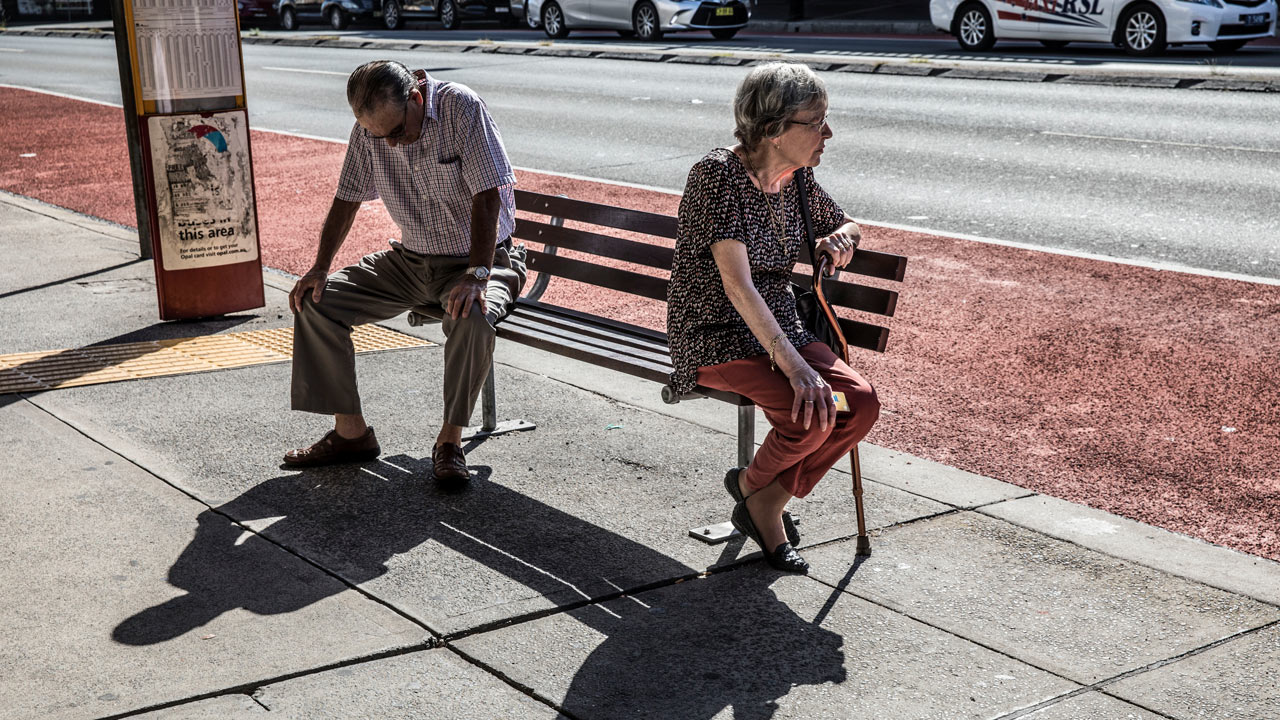
this strip has tumbled into disrepair. Some business owners say the location works for them but, for many, it’s
a retail wasteland with not enough parking and few pedestrians.
Historically, it has to be a new low for one of the city’s oldest and best-known streets.
So how did such a well-used thoroughfare become so neglected? Is it really a lost cause? Or after years of plans
to bring it back to life, could it actually be transformed by the ambitious plans of the the Greater Sydney Commission,
the state government’s land planning agency?
The Past
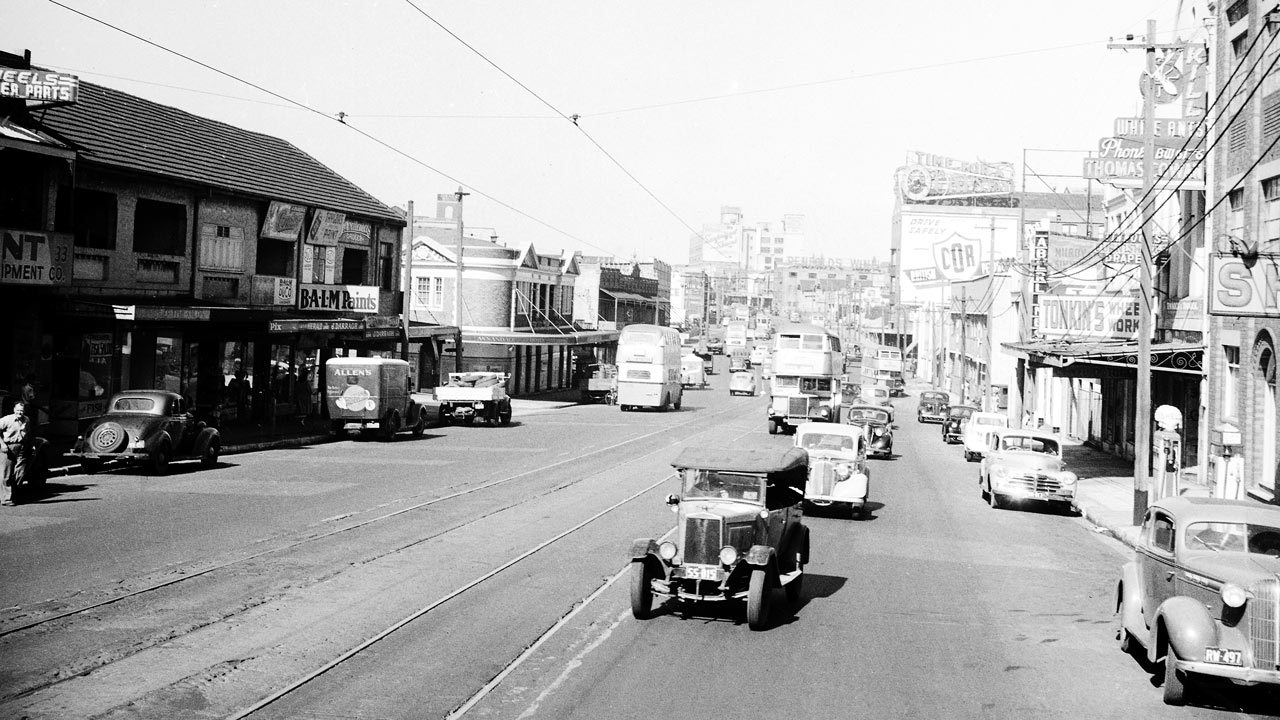
Let's go back to the start. Partly based on an Aboriginal walking track for the Dharug nation, Parramatta Road was
once a dusty link between the colony’s early settlements in Sydney and Parramatta.
It became a tollway in 1811 and was paved with stone shortly afterwards. In 1823, passengers could travel on a stage
coach between the two settlements at the risk of being held up by bushrangers. When the railway line to the west
opened in 1855, new stations and subdivisions began catering for Sydney’s growing population.
When cars arrived in the 1920s, Parramatta Road became one of the city’s busiest routes, but sheep and cattle were
still crossing at Homebush until the 1960s.
It has become known for car yards - and once the old Ford factory - as well as furniture stores and disused industrial
sites. It’s a major link to Flemington markets - you can still sometimes see a bizarre ballet of forklifts crossing
back and forth across the road - and events at Sydney Olympic Park. And generations of brides have headed to the
strip around Leichhardt for wedding dresses, flowers, suits, cakes and photographers.
By the 1950s, traffic congestion sparked plans for a motorway system. And when the M4 was opened, it took vehicles away from the section west of Concord.
According to NSW Transport Management Centre data, traffic on Parramatta Road at the Clyde railway crossing peaked in 1985 with an average of more than 67,500 vehicles a day. Within two years, it had fallen to 44,800.
The most recent data shows 48,000 to 49,000 vehicles a day passed that same spot from 2010 to 2013. But even so, the stretch from Harris Park to Concord has been getting worse for peak hour journeys, with the average speed falling from 30.8 to 29 kilometres per hour from 2014 to 2017.
There was a time when that now-struggling, inner-western strip was a vibrant shopping area. Writer Angelo Loukakis, who has lived in the area for more than 60 years, grew up behind his Greek father’s mixed business in Norton Street. As a boy, his mother would take him on Saturday shopping trips down Parramatta Road.
“Saturday morning was a quite a scene,” Loukakis says on a recent walk along the strip. “It was colourful and people would stop and talk to each other.”
Loukakis points out the shops that once existed but are now often just vacant: delicatessens, cafes, restaurants, butchers, fruit shops, milk bars and a picture palace (the Strand) not far from another one on the opposite site of the road (the Olympia, later Stanmore Twin).
“You also had general purpose stores like Coles,” Loukakis says. “They weren’t all Italian. The Commonwealth Employment Service had an office. A tobacconist. There were sporting goods shops. One shop sold guns. And there was a bicycle shop further along.”
Loukakis says these shops used to be very community-orientated. “Most of the people who owned the shops lived behind them and were known as locals to the customers, which is very different to the mall experience,” he says.
The Present
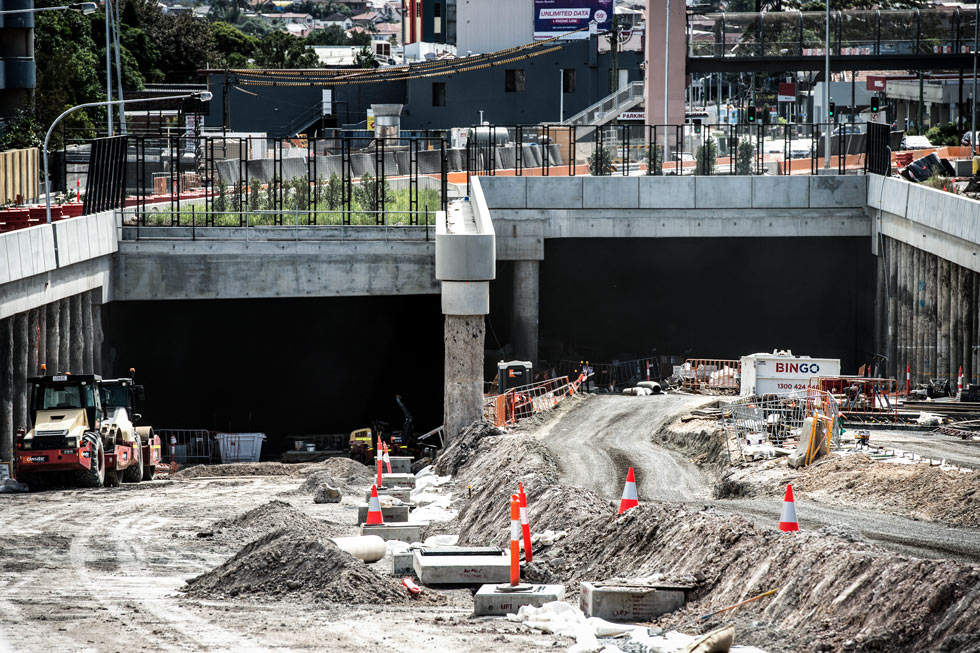
Drive down Parramatta Road now and you cannot miss construction of the $16.8 billion WestConnex project. Planners are hoping that when it is completed in 2023, linking the M4 and M5 motorways, it will help revive the iconic road by reducing traffic.
But for now, it remains one of the city's least loved roads.
On that inner-western strip, some well-known shops have shut their doors recently. Among them, an old Stanmore milk bar where the elderly owner still sits inside daily as though waiting for customers. A Chinese medical practitioner who famously boasted in his sign “don’t tell me what’s wrong with you because I will find out and tell you” has now told us that he has moved on.
And Cell Bikes has joined two other bike shops in the area in closing in the past year.
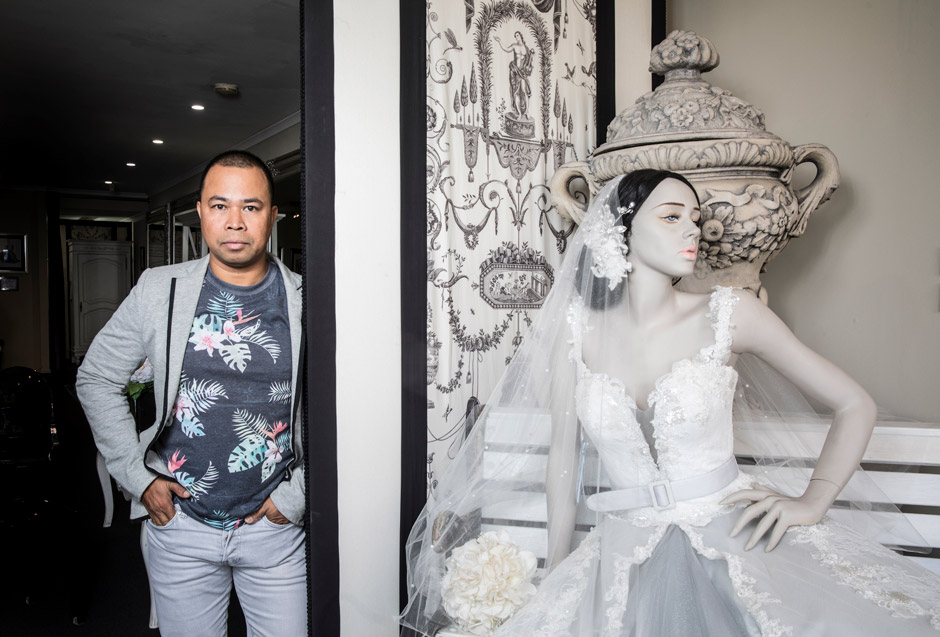
“It's pretty noisy; it’s pretty dirty. You have to be very careful opening doors, making sure it’s closed properly, because of the soot from the cars.”
Josetito Marquez at De Lanquez Bridal, 385 Parramatta Rd, Leichhardt
Rene Roth, the owner of music store Global Vintage Guitars, says shop rentals are cheaper than on the main street of Bathurst and he’s right. You can rent a small shop on Parramatta Road for $570 a week; in Bathurst, the cheapest available recently was $670.
“I’ve been on a month-to-month lease for seven years and they haven't made any attempt to increase the rent. They know that if I move out, it will be empty for a long time.”
Rene Roth at Global Vintage Guitars, 105 Parramatta Rd, Annandale.
With restricted parking, the shops that stay in business tend to be a "destination" with a high proportion of their business online. “If you want to get passing trade, they’re all sitting in cars,” the owner of another shop says. “They’re not walking on footpaths.”
Another retailer who moved in last year, James Bossi from Bossi Bicycles, says it was an easy decision for a new business: the rent was the lowest he could find within 10 kilometres of the Sydney CBD. Canny tenants have found that renting a shop - under the pretence of opening a pop-up store or art gallery - is cheaper than renting an apartment two streets away.
Even outside peak hours, traffic is so heavy on a downhill section in Leichhardt that you can hardly have a conversation without shouting.
Surprisingly, data shows traffic actually eased on Parramatta Road at Annandale in the decade to 2017. It dipped from about 32,300 vehicles a day to 29,800 on weekdays and 28,900 to 27,200 on weekends.
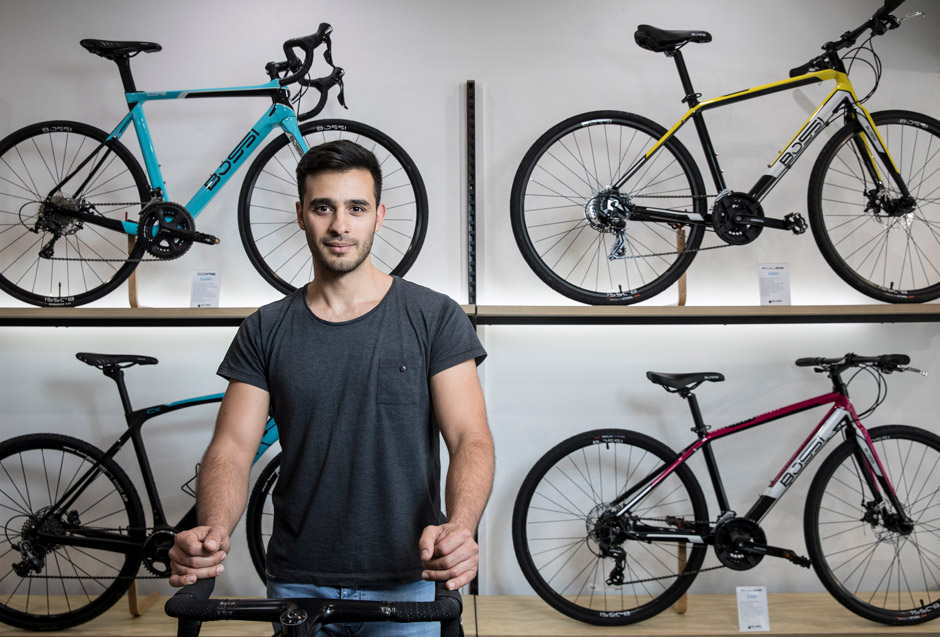
“There are a few cafes around but not really enough to drive a culture … There doesn’t seem to be a vibe around Parramatta Road.”
James Bossi at Bossi Bicycles, 27 Parramatta Rd, Annandale
Loukakis dates the decline of the shopping strip partly to the opening of a shopping centre nearby - Market Town, now MarketPlace - in 1975, which also affected shopping on Norton Street. Lack of parking was another key factor.
“Once the population grew - and more and more cars were around - it was very hard to stop anywhere along this strip [with] dedicated parking," he says. "The shopping malls brought dedicated parking.
“The other great change is that the migrant communities, as they became better established and they made some dough, they moved onto other parts. In the inner west, they went to Canada Bay, Haberfield, Abbotsford and so forth.”
For this long-time resident, the decline of the street is sad. “The various plans seem to have come to nought over the years,” he says.
The Future
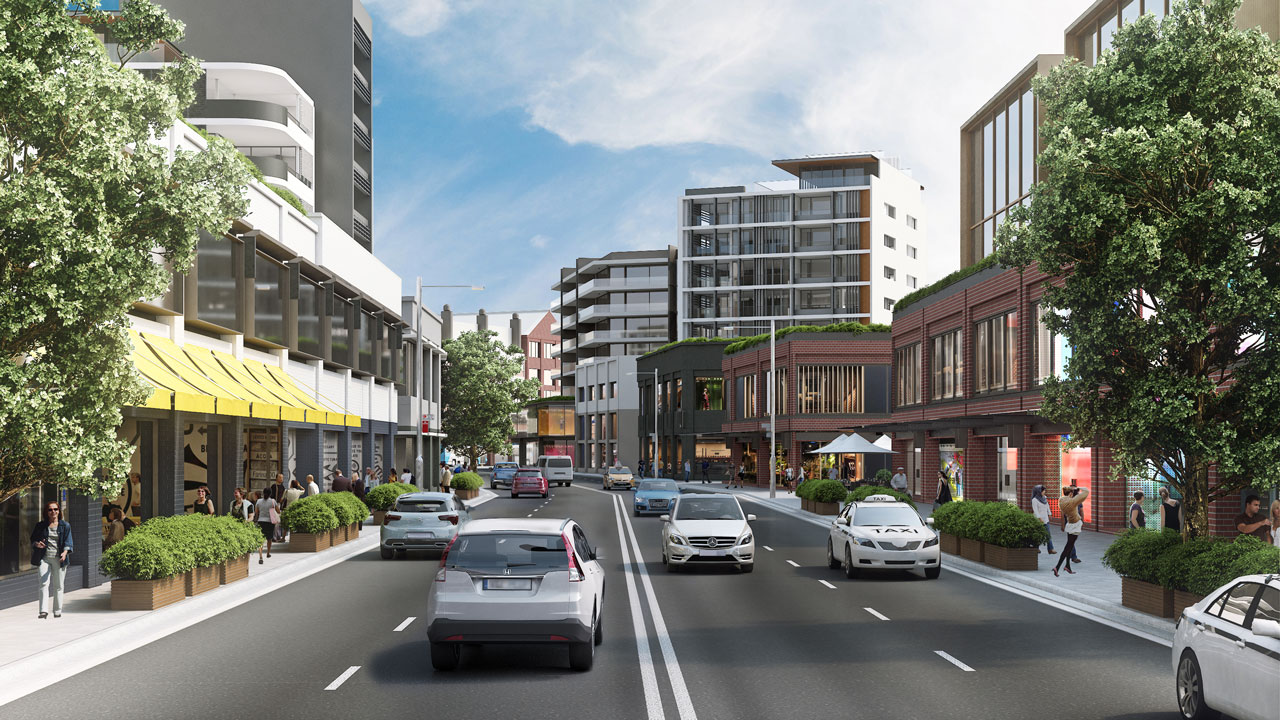
Two years ago, the Greater Sydney Commission launched an urban transformation strategy that aims to renew eight "precincts" along the corridor with their own distinctive characters within 30 years.
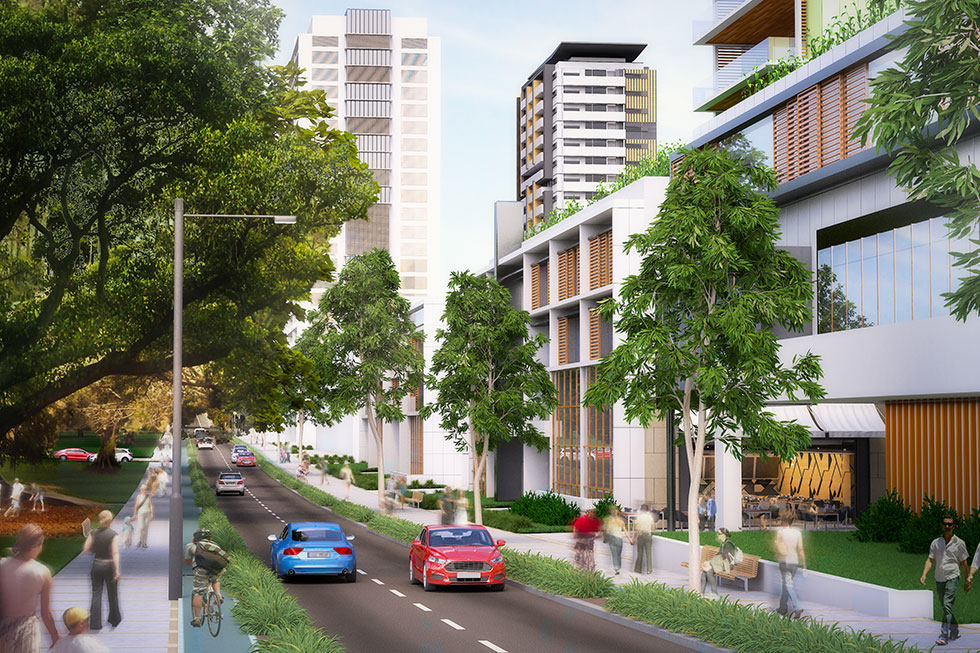
The plan is that the Granville precinct centring on Good Street, for example, will be "a vibrant, mixed-use town centre celebrating the diversity" of the area's population, with Parramatta Road becoming "a green boulevard lined with taller buildings".
The Auburn precinct will continue to be a major employment area with a new "creative precinct" near the M4. Homebush is to be developed into "a major high-density, mixed-use precinct" with taller towers around Strathfield, North Strathfield and Homebush stations and more jobs.
The Burwood-Concord precinct is to have "a greater diversity of housing" with streets that have "tall and medium-density residential buildings and mixed use buildings".
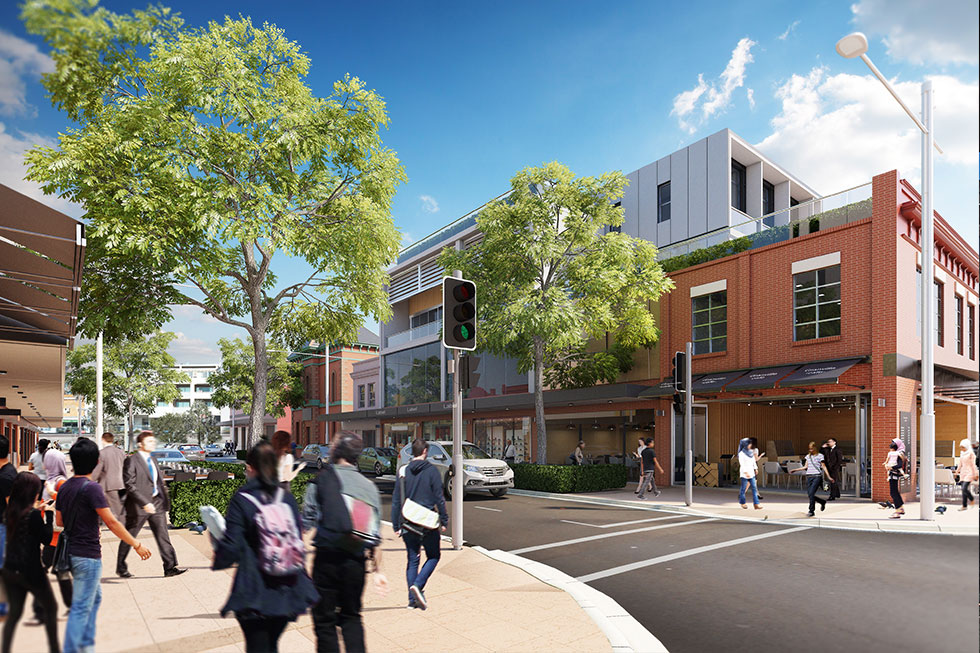
The focus in the Leichhardt precinct will be encouraging new businesses and more residential density in certain areas and reinvigorating Norton Street. And the Camperdown precinct will "generate jobs in specialised education and medical industries" and have more "student and affordable housing".
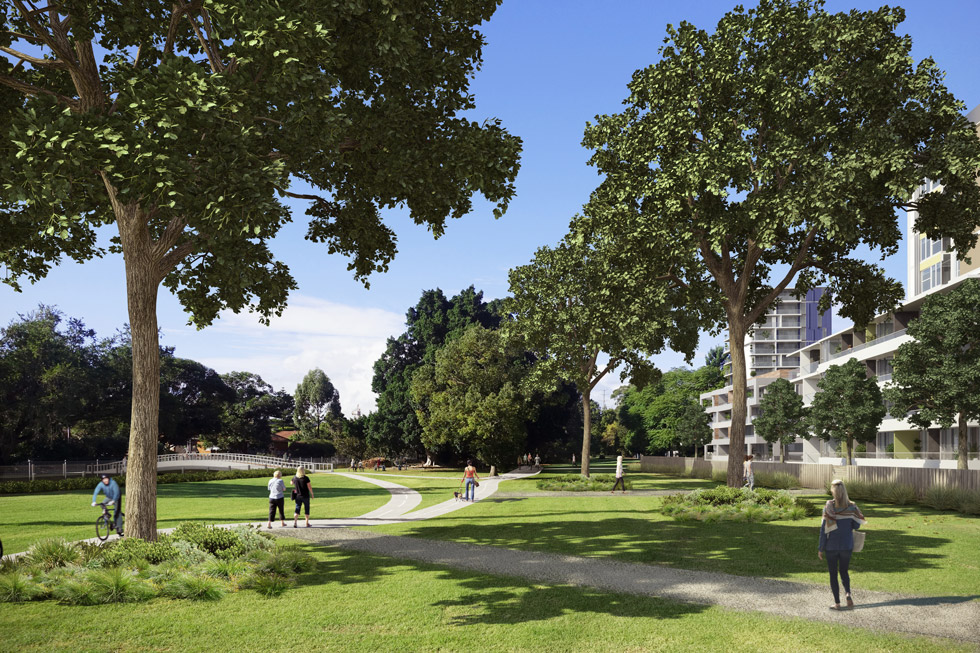
If that sounds like an ambitious long-term project, the commission is about to roll out 32 urban renewal projects worth $198 million in the corridor, with the first getting underway this year. Included are more playing fields at Five Dock, a new pocket park at Petersham, an upgraded pedestrian and cycleway M4 overpass at Auburn, a new urban plaza in Parramatta and a range of cycleway and walking path improvements.
Crucially, the strategy also includes a rethink of development controls to allow the construction of 27,000 new homes for 56,000 people within those three decades. That means rezoning land suitable for development and setting building guidelines.
While the commission's targets might be affected by the backlash against increased development and congestion around the city, developers are also concerned. The chief executive of lobby group Urban Taskforce Australia, Chris Johnson, believes the corridor needs “significant urban renewal” including mixed-use development on under-performing industrial land that can provide more jobs. But he says developers and landowners have been confused by “on and then off” signals from different government agencies.
Johnson says the latest catch is that each council now needs to work out its own direction on urban renewal with a Local Environmental Plan to be produced in the next few years. “The end result is a lack of certainty to land owners and developers along this very degraded corridor,” he says.
Inner West Council mayor Darcy Byrne believes better public transport would help revitalise Parramatta Road. He suggests the state government revisit its proposal for trackfree electric trams running down it from Strathfield to the CBD. State agency Transport NSW backed away from an agreement with the council to jointly fund a feasibility study late last year - saying it would "pre-empt the outcome of our strategic planning process" - after earlier abandoning plans for a light rail line along Parramatta Road.
"Having a really good modern public transport system down the middle lane of Parramatta Road and opening up the sides to kerbside parking again, in conjunction with other measures, could be the sort of thing that would revitalise the place," Byrne says.
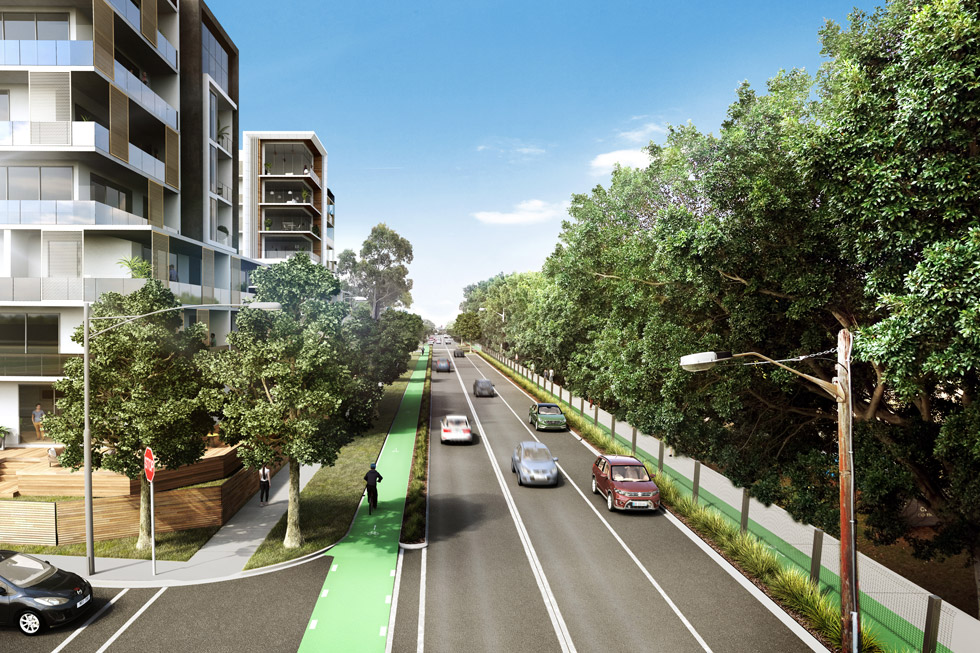
The Greater Sydney Commission's executive director for city planning projects, Greg Woodhams, can see a bright future for Parramatta Road: new buildings on redeveloped sites with better cycling and walking paths and more parking. He thinks that shops will be more viable from tapping a larger local population, which in turn will make the road "more people friendly" and less dominated by traffic.
But there is a long history of plans to revive Parramatta Road being announced with a flourish that have gone nowhere.
It was already so degraded in the early 1980s that a University of NSW lecturer ran a competition seeking ideas to spruce it up. It produced some imaginative solutions including playing on the “auto alley” image with huge car-related sculptures and, at the opposite extreme, planting Moreton Bay fig trees a continuous line down a wider median strip.
In 1995, then Leichhardt mayor Larry Hand pushed for a bold beautification program before the Sydney Olympics that included returning to the heritage nature of the shop fronts.
In 2001, the Herald boldly proclaimed that “revolutionary plans for improving our great western artery were underway” after a consortium called SydneyCentral won an international competition to revitalise Parramatta Road. Its plans included “new communities” living in medium- and high-density housing, an underground metro, a tram down the centre of the road, bike lanes on either side, more public spaces and renaming it the more appealing Central Parkway. In a forerunner of the Powerhouse to Parramatta controversy, they suggested moving the Museum of Contemporary Art to Granville.
It was supposed to be Australia's largest urban design project since Walter Burley Griffin designed Canberra. And while it never actually happened, landscape architect Adrian McGregor, whose firm McGregor Coxall was one of the consortium’s leaders, says it has influenced recent planning.
“Some things have happened,” McGregor says. “The M4 east connection is underway. That was a part of releasing traffic movement in order to create a High Street along Parramatta Road [and] to take lanes out of it for light rail and people, with bigger footpaths and trees. I would hope that still can happen once that motorway is finished. And the Metro has been proposed and we would hope that is still delivered because it creates all the opportunity for regeneration around the stations.”
Other proposals, including an open-cut motorway that was superseded by WestConnex and various proposals for a light rail line and so-called trackless trams, have also been flagged and abandoned in the past decade.
Some will suggest that Parramatta Road just needs to be a working link in the city’s transport system, not a stylish boulevard. But a growing city needs improvements to clogged transport routes. It also needs more apartments.
Tens of thousands of Sydneysiders would benefit if it becomes the vibrant corridor of connected communities that has been promised. The question now is whether it will finally be delivered.
As landscape architect Philip Coxall said almost a decade ago: “Sydney will be a great world city when you can take a foreign visitor on a journey along Parramatta Road with the same pride you feel when you take them to the harbour."